Awaab's Law came into force on 27 October 2025. The law ensures all social landlords fix serious problems like damp and mould within strict timescales. The law is named for two-year-old Awaab Ishak who tragically passed away in 2020 in his home in Yorkshire as a result of a severe condition due to prolonged exposure to mould in his home.
City Corporation Housing has made important changes to how we deal with damp and mould to comply with Awaab's Law, including:
A triage system to assess risk levels at first contact.
New repair categories in our systems to ensure timely action.
Monitoring tools to track inspections and repairs.
We are also on track to visit every home on our estates as part of Inside Every Home project. As part of this project, our stock condition survey will identify damp and mould issues proactively to ensure identified issues are dealt with promptly and appropriately.
Report damp and mould
The City of London Corporation Housing take reports of damp and mould very seriously. If you spot signs of damp and mould in your home, please report it to us immediately.
Please report any damp and mould in your City of London managed property to the Property Services team using the online form or contact details below. Make sure to include relevant details such as where the mould is located, how extensive it is, and whether anyone in the household is vulnerable.
Out of hours emergency repairs can only be reported between 5pm - 8am.
For gas repair, please press option two and you will be passed onto TSG Building Services.
Our approach to damp and mould
City Corporation Housing understands that it has a duty to investigate and manage damp and mould issues in our residents' homes.
Dampness can occur for different reasons and does not always result in mould growth.
All reports of damp and mould are assessed on an individual basis in terms of severity, cause, and resident vulnerabilities.
If mould is present, depending on the severity of the issue, we may ask our contractors to complete a mould treatment of the affected areas:
We aim to complete standard mould treatments within ten working days.
In severe cases, we aim to complete an emergency mould treatment within 24 hours.
If a water leak or water penetration is suspected, we will ask our contractors to investigate and complete any required repairs.
We aim to complete standard leak investigation and repairs within 20 working days.
Where a leak is severe and uncontainable, we aim to complete emergency repairs within 24 hours.
We may also send a Property Services Officer to assess your home. During the visit they will diagnose the causes of the damp and mould and identify any essential repairs needed. Where appropriate, we will provide advice about how you can manage and reduce damp and mould in your home.
We aim to complete damp and mould inspections within 10 working days
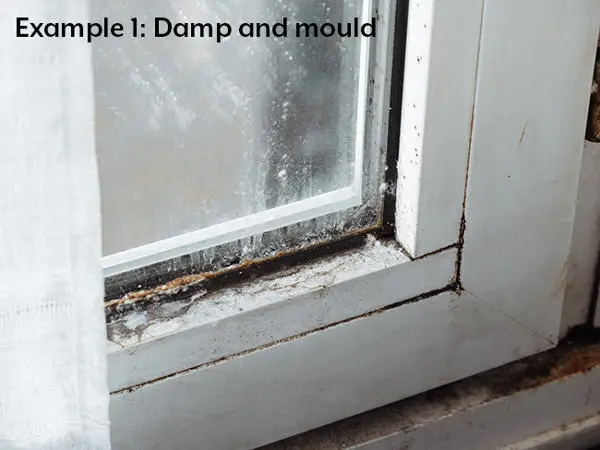
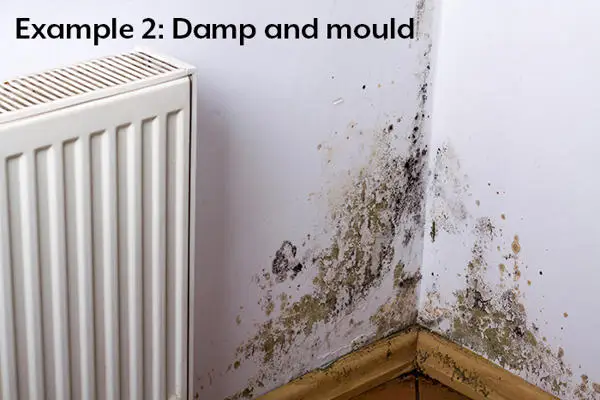
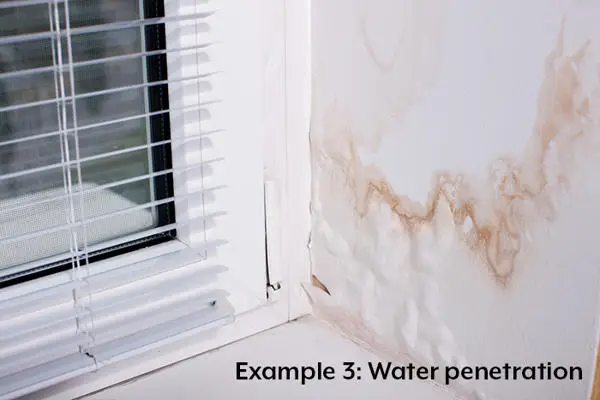
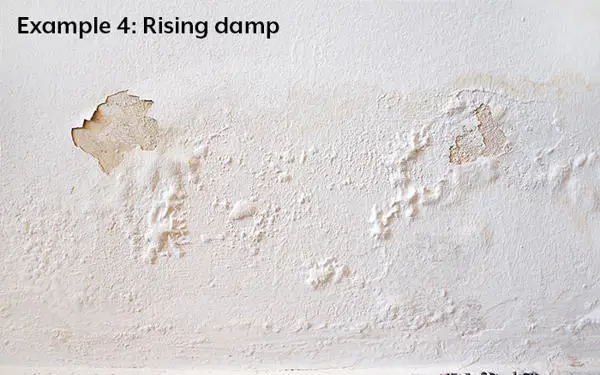
For examples of different types of damp and mould and what to look out for, scroll to the bottom of this page.
Types of dampness
Condensation damp happens when moisture generated inside the home cools and condenses onto colder parts of the buildings (for example window frames, corners and low points on walls, behind sofas or wardrobes). This is the most common form of damp.
The average household produces around 14 litres or 24 pints of water vapour every day. This vapour is held in the warm air and must be extracted out of the home, otherwise condensation may form.
Where condensation is identified as a cause of damp and mould growth, it is not meant to imply blame on the resident, but confirms that the issue is related to heating, ventilation, and insulation. Residents may be advised about actions they can take to help manage condensation.
If condensation is identified as a cause of damp and mould growth, we will also investigate defects with heating, ventilation and insulation under our repair obligations.
Penetrating damp is water that gets into the building from outside due to defects in the walls, roofs, windows, or floors.
Rising damp is moisture from the ground that rises through parts of the buildings in contact with the ground (walls and floors). It is usually found in older properties and is often misdiagnosed.
The cause can be a broken, defective, or absent damp proof course (DPC) or where the DPC has been breached externally by raised flower beds, patios, decking or vegetation growth.
Traumatic damp can be caused by leaking water from waste and heating pipes, overflowing baths or sinks, burst pipes, or defective water storage vessels inside the building.
Traumatic damp can also originate from outside the property, for example from another building or from environmental flooding.
Tackling condensation and mould
We're here to help you keep your home safe, healthy and comfortable. We follow the latest industry advice and best practices when it comes to tackling condensation and mould. We regularly review and update this with input from residents across our estates.
From 27 October, a new law known as Awaab’s Law has come into effect across England. This landmark legislation is designed to protect tenants from the serious health risks posed by damp and mould in social housing.
Damp and mould are not just unpleasant, they can be dangerous. Exposure to mould can cause or worsen respiratory conditions, allergies, and other health problems, especially for vulnerable groups like children, the elderly, and those with pre-existing health conditions.
Our team has implemented new procedures to comply with Awaab’s Law, including:
A triage system to assess risk levels at first contact.
New repair categories in our systems to ensure timely action.
Monitoring tools to track inspections and repairs.
If you notice signs of damp or mould in your home:
Include relevant details such as where the mould is located, how extensive it is, and whether anyone in the household is vulnerable.
Keep records: Take photos and note the date you reported the issue.
If mould is present, depending on the severity of the issue, we may ask our contractors to complete a mould treatment of the affected areas:
We aim to complete damp and mould inspections within 10 working days.
We aim to complete standard mould treatments within 10 working days.
In severe cases, we aim to complete an emergency mould treatment within 24 hours.
If a water leak or water penetration is suspected, we will ask our contractors to investigate and complete any required repairs.
We aim to complete standard leak investigation and repairs within 20 working days.
Where a leak is severe and uncontainable, we aim to complete emergency repairs within 24 hours.
We may also send a Property Services Officer to assess your home. During the visit they will diagnose the causes of the damp and mould and identify any essential repairs needed. Where appropriate, we will provide advice about how you can manage and reduce damp and mould in your home.
For your safety, we ask all our contractors to let us know if they spot signs of damp and mould in resident’s home. If they do, we will contact you and let you know what we can do to help resolve the issue.
We are committed to ensuring every resident lives in a safe, healthy home.
The control of mould and condensation is based on primarily on ventilation and heating and in some cases by insulation.
A healthy 'dry' home is normally achieved by having a perfect balance between ventilation, heating and insulation.
Black mould is often caused by condensation, and under ideal conditions, it takes mould between 24 and 48 hours to grow. The spores are usually black in appearance but can also appear as fluffy, white, brown, or green stains and are typically found at the skirting level in rooms, in the corners of walls and ceilings or on cold surfaces. Mould can also appear behind furniture where the airflow is restricted and in tightly packed wardrobes. Mould and mildew can also grow on furnishings, curtains, clothes, shoes and they can spoil wallpaper and furnishings.
Landlord advice on self-treatment has changed significantly over time as more research is undertaken about the effects of damp and mould. Residents are only advised to self-treat minor mould on easily wipeable surfaces such as wall tiles, sealants, painted surfaces, windows and doors, using a proprietary store-bought product and following the manufacturer’s instructions for use.
Residents are not advised to self-treat large areas of mould on porous surfaces such as walls and ceilings. Incorrect treatment can spread & release mould spores to unaffected areas. Residents are advised to report these issues to the Property Services team using the form or contact details above, and who will undertake a mould treatment treatment, if appropriate.
Clothing and soft furnishings affected by mould can be cleaned by pre-treating with a stain remover and washing at higher temperatures or by professional steam cleaning or dry cleaning.
Wallpaper is not recommended for damp environments such as kitchens and bathrooms. Residents are advised to use washable or wipeable paint in these areas. Anti-mould paint can be used in areas where mould growth persists.
Extractor fans are designed to extract moist air from within a room. Windows and doors should be kept closed when operating an extractor fan, to ensure the extractor fan works correctly and to prevent cold air from being drawn into a room and lowering surface temperatures.
Where there is no extractor fan, customers should open windows and vents and close doors after showering, bathing, or cooking, to provide natural ventilation to the room.
Areas between furniture (beds, wardrobes, etc.) and external walls will encourage condensation to form, because there is no circulation of warm air. Leave a gap of at least 3" to 4" (75mm to 100mm). Avoid putting too many things in cupboards, wardrobes and under the bed as this can prevent air circulation.
Condensation is more likely to be a problem in a home that is under-heated.
During the winter months the thermostat temperature should be set between 18-21°C.
The heating should never be on for less than 3 hours at a time as short bursts of heat will only warm up the air, leaving surfaces cold.
Loft spaces should be insulated to prevent heat loss through the roof and prevent cold areas on ceilings.
Date submitted: 18/12/24Example 1: Damp and mould on a window paneExample 2: Damp and mould forming in the corner of a roomExample 3: Water penetration causing damp and water marks on a wallExample 4: Rising damp on an exterior wall causing paint to flake off and become raised